


Why is Retail Supreme increasingly associated with MCH stock?
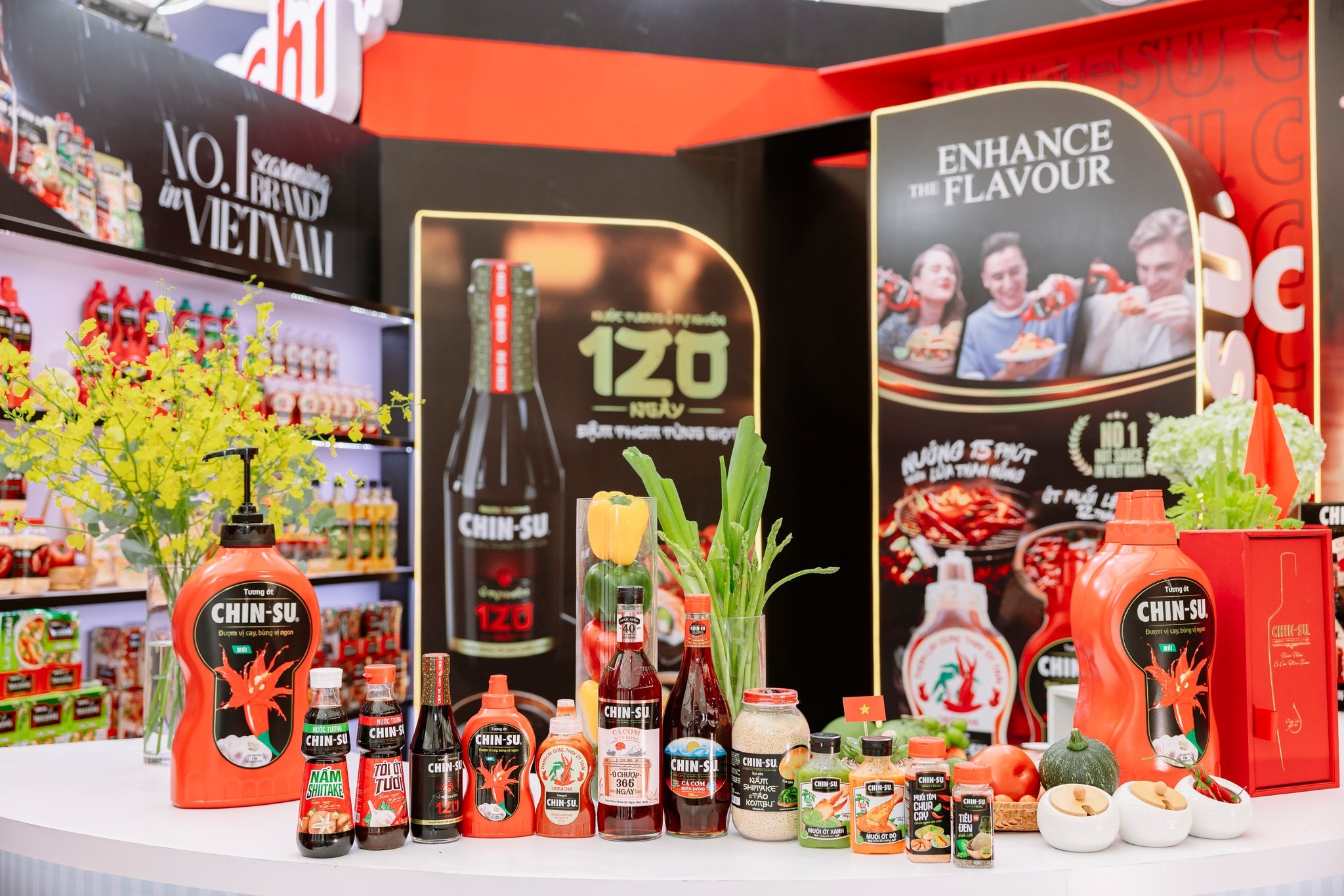
When investors think of MCH stock, they often associate it with a leading FMCG company behind familiar brands such as CHIN-SU, Nam Ngư, Omachi, and Wake-Up 247. However, in recent years, Masan Consumer’s story has evolved beyond products and market share toward a broader ambition: building a scalable consumer distribution platform powered by technology and data. This is the "key" to unlocking the enterprise's valuation in a new growth cycle.
As Vietnam’s FMCG industry enters a more competitive phase, the challenge for companies is no longer simply about “selling more products.” Instead, the focus has shifted toward improving efficiency at each point of sale, accelerating time-to-market for new products, and sustaining long-term growth. This is the context in which Retail Supreme was developed a direct distribution model that Masan Consumer considers one of its key growth engines for the next phase.

According to the company, before implementing Retail Supreme, Masan Consumer’s traditional trade channel saw almost no growth in 2024, despite the market’s significant scale. The issue was not only consumer demand, but also structural inefficiencies, including heavy reliance on intermediaries, limited direct coverage, and suboptimal outlet productivity.
This highlights that Masan Consumer’s growth opportunity lies not only in product expansion, but also in redesigning the way its distribution network operates. For MCH stock, this is particularly relevant, as capital markets often place a premium on companies capable of transforming their growth models toward greater efficiency rather than relying solely on top-line expansion.
Retail Supreme: from a distribution system to a consumer data platform
Retail Supreme is built around four pillars: technology, full assortment, dense coverage, and strong merchandising execution. Rather than relying primarily on wholesale channels as in the past, Masan Consumer has shifted toward a direct-to-outlet model while leveraging real-time data to manage operations.
After more than a year of rollout, the system has expanded significantly nationwide. According to company updates, active selling outlets (ASO) have reached approximately 500,000, more than doubling compared to the period before the model was implemented. At the same time, SKUs per order increased to approximately 5.5, while around 57,000 stores now distribute all six product categories of Masan Consumer. For MCH stock, these ASO and SKU density indicators are testaments to the deep market penetration capability, helping the company optimize logistics costs and increase order value per touchpoint.
These figures demonstrate that Masan Consumer’s growth is not only driven by broader distribution coverage, but also by increasing value per outlet. This distinction is critical, as operational efficiency often determines the quality of growth and the sustainability of profit margins in the FMCG industry.
Another notable development is the role of technology within the Retail Supreme ecosystem. According to the company, data at each outlet is now updated in real time, covering sales, inventory, and product assortment. Retailers can place orders directly via QR codes, while Masan Consumer has established two-way interaction with the traditional retail channel something that previously barely existed.
This suggests that Retail Supreme is evolving beyond a sales initiative into a consumer data platform. The power of owning Big Data from 500.000 points of sale creates an exclusive advantage for Masan Consumer in understanding consumer tastes without relying on third-party market research firms. For MCH stock, this is an important factor because it enhances the company’s ability to forecast demand, optimize distribution, and shorten the commercialization cycle for new products.
How is Retail Supreme impacting Masan Consumer’s growth?
Masan Consumer’s 1Q2026 results indicate that the early benefits of Retail Supreme are already beginning to translate into stronger business performance. According to the company, first-quarter net revenue reached approximately VND8,473 billion, up 13.1% year-on-year, returning to a double-digit growth trajectory. This growth rate far exceeds the FMCG industry average, affirming the superior efficiency of the Retail Supreme model in boosting market share and MCH stock value.
Importantly, growth was broad-based across multiple product categories. Seasonings grew approximately 17.1%, convenience foods increased around 14%, while home and personal care (HPC) products surged more than 34%. This reflects the balanced performance of the company’s portfolio, rather than dependence on a single category.
Retail Supreme has played a critical role in this process by enabling faster market rollout and broader consumer reach for new products. According to the company, approximately 70,000 stores now carry new products within just two weeks of launch.
This is especially significant in a market where consumer trends evolve rapidly and product innovation cycles are becoming shorter. For FMCG companies, the ability to shorten the gap between R&D and commercialization can become a major long-term competitive advantage.
In addition, Retail Supreme supports Masan Consumer’s premiumization strategy. New products such as OMACHI Tam Hoa Hotpot, positioned around both elevated experience and natural ingredients, are being rapidly scaled through this distribution platform.
From an operational perspective, another noteworthy point is that Retail Supreme’s expansion has been achieved without materially increasing selling expenses as a percentage of revenue. This is particularly important for investors tracking MCH stock, as it indicates that the company is not only scaling up, but also improving growth quality and capital efficiency.
MCH stock and expectations for a new growth cycle
For many years, Masan Consumer has been recognized as a leading FMCG company thanks to its strong brand portfolio and profitability. However, recent developments suggest that the company is moving toward a new growth model in which technology, data, and distribution infrastructure play a central role.
This has important implications for MCH stock, as capital markets often reward companies capable of building repeatable and scalable “growth engines.” Through Retail Supreme, Masan Consumer is gradually transforming from a traditional FMCG player into a consumer-distribution platform capable of operating in real time. The synergy between manufacturing strength and modern retail capability creates a unique business model, providing MCH stock with an opportunity for re-rating according to the standards of leading regional Consumer-Tech companies.
Over the long term, as the system continues to expand and optimize, Masan Consumer may not only increase revenue, but also improve operational efficiency, enhance profit margins, and optimize cash flow generation. These are foundational factors supporting the market’s long-term confidence in the company. In particular, the ability to control direct retail data helps minimize inventory risk and optimize the working capital cycle indicators that institutional investors always prioritize when analyzing MCH stock.
At the same time, the combination of product innovation, large-scale distribution capabilities, and Vietnam’s ongoing consumer premiumization trend could create new growth momentum for Masan Consumer over the coming years.
For investors, tracking MCH stock is no longer just about quarterly earnings performance it is increasingly about understanding how the company is building a scalable and self-optimizing growth model for the future. This is the solid foundation for MCH stock to maintain its position as one of the most valuable and stable investment assets in the FMCG sector.
Masan Consumer (HOSE: MCH) is a subsidiary of Masan Group (HOSE: MSN), one of Vietnam’s leading consumer-retail platforms. The company owns a strong portfolio of brands including CHIN-SU, Nam Ngư, Omachi, Kokomi, and Wake-Up 247, with products present in more than 98% of Vietnamese households and exported to over 26 countries worldwide.