Updated
MSR Proposes Returning Capital to Shareholders as Deleveraging Runs Ahead of Target
August 12, 2026

Ho Chi Minh City, 27 July 2026 - Following the release of its unaudited management accounts, Masan Group Corporation (HOSE: MSN, “Masan”, “Group” or the “Company”) today published its management commentary for the second quarter (“2Q2026”, “2Q”) and first half of 2026 ("1H2026", “1H”).
2Q2026 Key Highlights:
MSN proposes raising its high case FY2026 NPAT Pre-MI target by ~46% to VND11,500 billion - implying NPAT Post-MI of approximately VND8,000 billion, up ~2.0x YoY.
The revised outlook translates into approximately VND23,000 billion in EBITDA this year.
With each business now self-funding its growth and beginning to return cash to MSN, free cash flow is prioritized for deleveraging, reinvestment and near-term shareholder capital returns.
MSN delivered record profitability - 2Q and 1H NPAT Pre-MI grew 2.3x and 2.2x YoY, respectively.
NPAT Post-MI - the profit attributable directly to MSN shareholders - grew 3.0x YoY in 1H.
Deleveraging accelerated - Group Net Debt/EBITDA fell to 2.4x from 2.7x in FY2025.
The Consumer Operating System (“cOS”) - Masan’s integrated consumer platform - delivered broad-based ~21% YoY revenue growth in 2Q.
WinCommerce (“WCM”), the retail engine, turned scale into profit - 2Q revenue up ~27% YoY and NPAT Pre-MI up 14x YoY.
Masan Consumer (“MCH”), the brand engine, delivered volume-led double-digit topline and bottom-line growth, supporting up to 3-4% dividend yield .
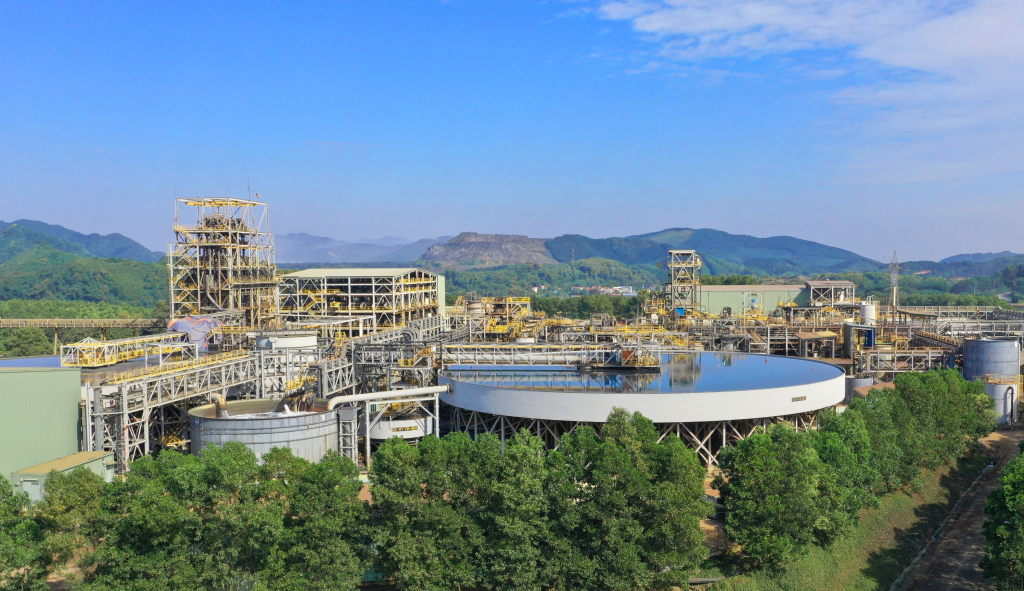
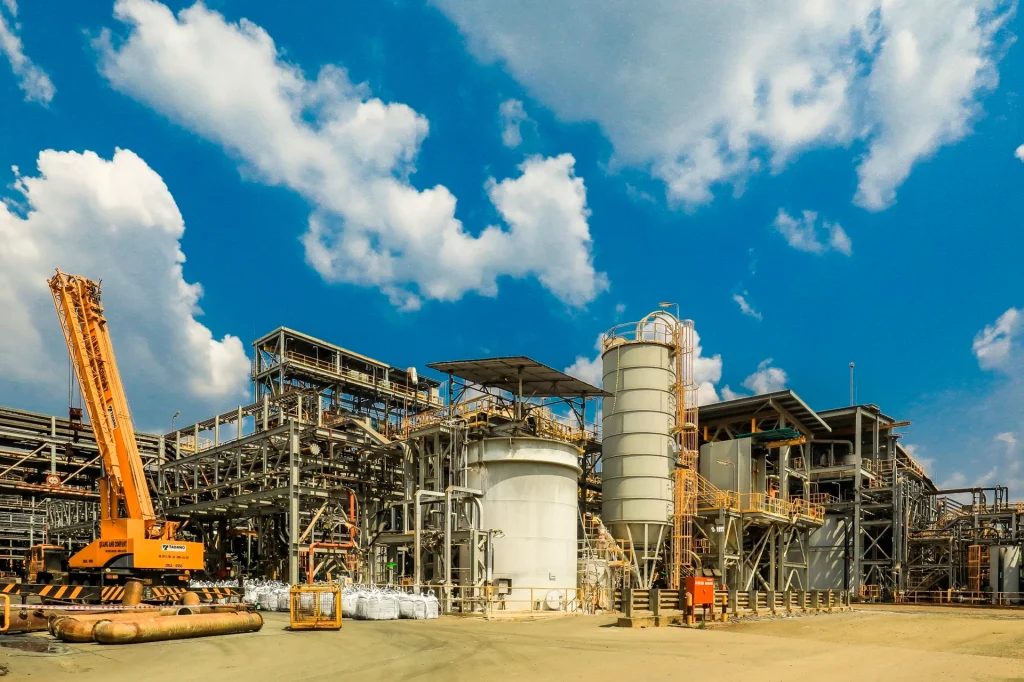
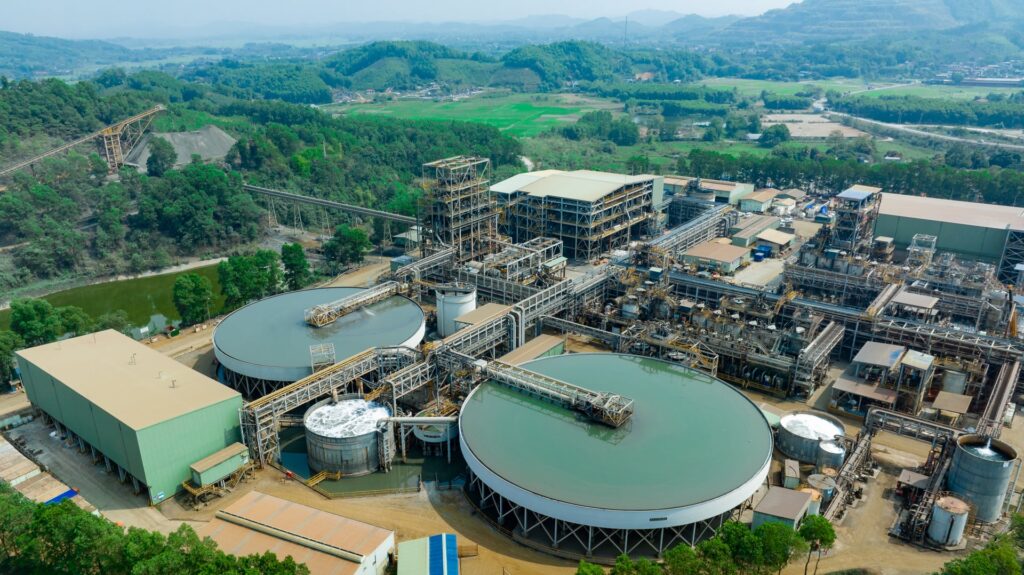
Masan High-Tech Materials (“MSR”), the Group’s global strategic materials platform, grew 2Q NPAT Pre-MI from VND6 billion to a record VND1,666 billion as tungsten led the AI-linked critical materials rally.
MSR’s Net Debt/EBITDA is on track for approximately 1.7x by year-end - opening a path to cash dividends from 2027.
Business Commentaries:
The Great Connectivity: one consumer operating system, three engines, self-funded growth
As set out at the 2026 AGM, cOS connects the Retail Engine, the Brand Engine and the Digital Engine - a unique combination positioned to capture a growing share of the end-to-end consumer profit pool.
cOS funds its own growth - generating ROE of approximately 20.7% - and offers a long runway as the only integrated consumer platform of its scale.
Masan’s 2Q2026 performance was driven by both its cOS - a self-reinforcing consumer platform - and MSR:
cOS - Masan's Brand, Retail and Digital engines working as one - delivered VND20,059 billion in revenue, up 20.5% YoY, and VND3,356 billion in NPAT Pre-MI, up 26.2% YoY.
In particular, Techcombank (“TCB”) contributed VND1,450 billion in profit share in 2Q, up 19.2% YoY - a stable contributor to Group earnings quality.
MSR, the Group’s global strategic materials platform, contributed VND1,666 billion in NPAT Pre-MI in 2Q2026, up from VND6 billion in 2Q2025 - hard-currency earnings on sharply higher APT prices.
The Retail Engine: profitable growth at scale
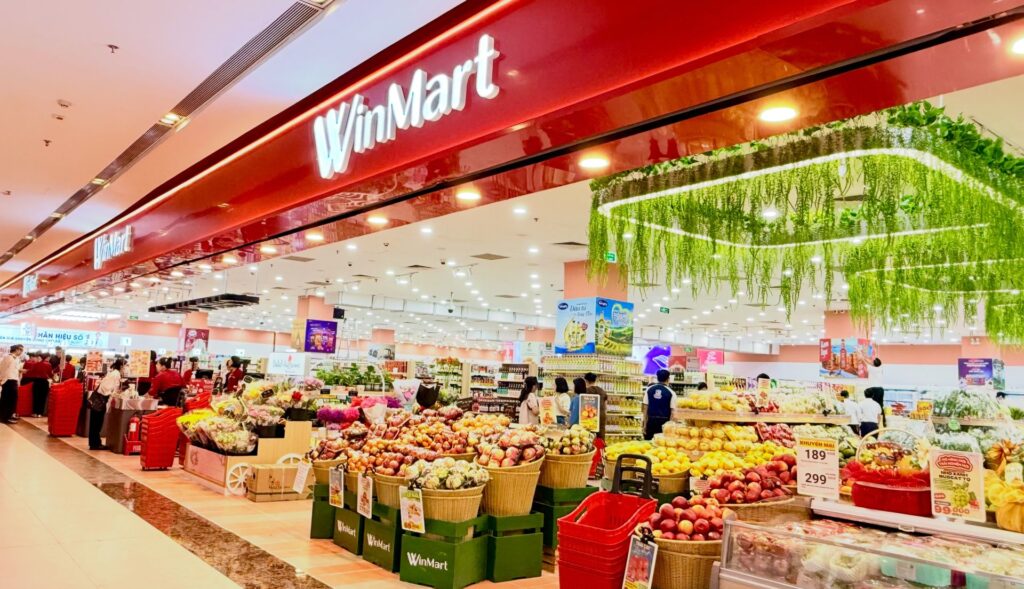
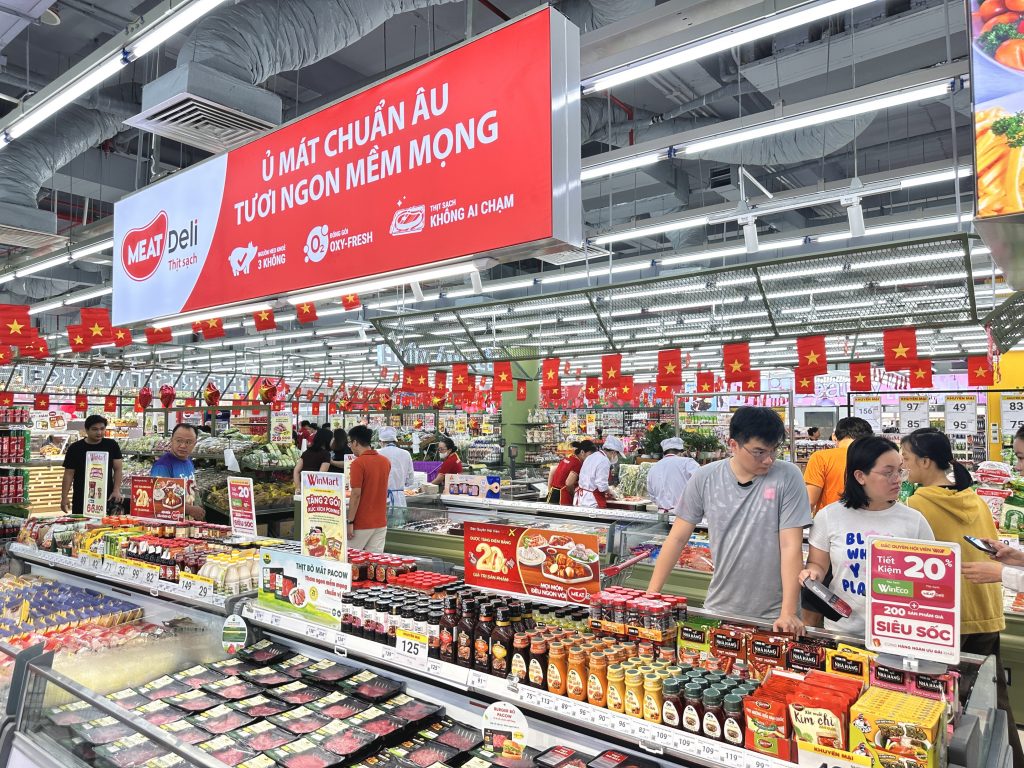
In modern trade, WCM delivered VND11,629 billion in 2Q2026 revenue, up 27.4% YoY, and VND142 billion in NPAT Pre-MI, up 14x YoY, driven by network expansion, higher store traffic, and operating leverage. 1H2026 revenue growth was ahead of the full-year guidance range, with momentum carrying into a seasonally stronger second half.
Profitable expansion: WCM added 324 net new stores in 2Q2026, reaching 5,141 stores nationwide - on track for its 1,000-1,500 full-year target. More than 90% of the quarter’s new stores hit store-EBITDA breakeven within the quarter.
LFL growth was traffic-led across formats: Minimarts grew 12.4% LFL - the eighth consecutive quarter of double-digit growth. Supermarkets grew 16.3% LFL, lifted by renovations and higher store productivity.
Rural minimarts remained the primary growth driver: rural ADS has reached approximately 90% of urban levels - evidence the format scales in underpenetrated markets - with 26% LFL growth and approximately 80% of the quarter’s new stores.
Profitability keeps improving: Net margin expanded by 110 bps YoY to 1.2% in 2Q on scale and cost discipline. Margin narrowed QoQ on higher seasonal energy cost, but revenue held flat versus 1Q - demand stayed firm after Tet. WCM remains net cash positive, with net working capital at 1 day funding expansion without balance-sheet pressure.

In general trade, Retail Supreme deepened Masan’s direct coverage. MCH’s GT sales grew 10.6% YoY, with active selling outlets at approximately 550,000, SKUs per outlet reaching approximately 5.8, and about 43,000 outlets now selling more than six categories. The focus now shifts from adding outlets to raising productivity per outlet - the next leg of GT growth.
In F&B retail, Phuc Long Heritage (“PLH”) extended the engine’s playbook, delivering VND550 billion in 2Q2026 revenue, up 26.9% YoY, driven by delivery growth, higher in-store productivity and disciplined network expansion:
Standard-format LFL ADS reached VND26.2 million, up 18.5% YoY - evidence of improving store-level unit economics.
PLH opened 15 new standard-format stores in 2Q2026, bringing standalone stores to 220 nationwide (excluding WCM kiosks) - on track for 40-50 NSOs in 2026, weighted toward 2H2026.
The Brand Engine: premiumization and share gains across the daily basket
MCH delivered VND7,165 billion in 2Q2026 revenue, up 14.2% YoY, tracking its FY2026 guidance range. Growth was volume-led, up 12.5% - a signal of resilient underlying demand following the distribution transformation completed in 2025. Growth came from three levers:
Premiumization led by CHIN-SU (revenue up 27.0% YoY) and Omachi (revenue up 17.8% YoY), shifting mix toward premium tiers.
Share gains anchored by Nam Ngu’s recovery (fish sauce volume up high single-digit YoY), Kokomi holding its value base in a declining mass-noodle segment, and Bottled Beverages returning to growth at 17.8% YoY.
New growth engines - home and personal care (“HPC”) up 32.5% YoY, volume-led, driven by Chanté and Homey off a small but fast-scaling base, and Global Business up 24.0% YoY.

Logistics weighed on net margin: gross margin held broadly flat YoY at 44.6%, while net margin compressed 80 bps YoY to 20.7%, driven primarily by logistics costs rising to 4.4% of revenue, up 120 bps YoY.
Extending the brand playbook into protein: Masan MEATLife (“MML”) delivered VND2,683 billion in 2Q revenue and VND191 billion in NPAT Pre-MI - equivalent to a 7.1% NPAT margin, up 480 bps YoY on normalized basis, excluding the impact of non-cash gain from a renegotiated long-term supplier agreement in 2025. Fresh meat grew 15.2% YoY and processed meat grew 34.7% YoY, with processed meat reaching 37.6% of revenue - reinforcing the shift toward a higher-margin, brand-led protein model.
WCM as the execution channel: total MML sales through WCM grew 30.5% YoY, and average daily sales per LFL WCM store reached VND2.6 million, up 18.9% YoY.
Innovation as a repeatable capability: Heo Cao Boi grew 21.2% YoY and Ponnie grew 45.5% YoY. Innovation revenue contributed 37.5% of branded revenue - evidence that new launches are compounding into a durable growth driver.
The Digital Engine: technology driving productivity across the platform
Location scoring is evolving from a data platform into an operating platform for store expansion - no longer just scoring where to open but running the pipeline end to end.
Product scoring proved at MEATDeli with a 4% sales uplift, and that result is now being rolled out into an automated assortment model across the network.
WiNARE aims to complete its first phase in 3Q2026, onboarding and digitizing 90% of order value through a centralized ordering system. Every 10% increase in automated ordering generates approximately VND100 billion in annual savings. Over the next 12 months, the focus shifts to optimization: driving down inventory days (DIO) and shrinkage.
MSR: the global strategic materials platform accelerating Masan’s cash generation
MSR delivered a material step-up in earnings in 2Q2026, with revenue of VND8,138 billion, up 5.0x YoY, and NPAT Pre-MI of VND1,666 billion, up from VND6 billion in 2Q2025. The uplift was driven by sharply higher APT prices at USD3,245/mtu on average in 2Q - more than doubling the original AGM planning case- alongside improved operating performance.
Tungsten led the AI-linked critical materials rally: AI infrastructure build-out, semiconductor capacity expansion and defense programs lifted APT to USD3,245/mtu on average in 2Q, anchoring MSR's growth foundation in secure non-China supply rather than commodity price alone.
Refinery throughput scaled ahead of margin: EBITDA grew by 4.4x YoY as MSR maximized refinery utilization with externally sourced tungsten feed during the West Pit transition. This feed carried lower margins, compressing EBITDA margin in the period. Margins are expected to expand from here as internal production ramps up - the operating leverage still ahead of the P&L.
Deleveraging is accelerating: MSR’s Net Debt/EBITDA is expected to move to approximately 1.7x by year-end 2026 from 2.1x in 2Q2026, and toward net cash by end-2027- lowering interest expense, lifting earnings quality and positioning MSR to potentially begin paying dividends from 2027.
Policy tailwind: export-tax reductions on acid-grade fluorspar and bismuth cement are expected to add approximately USD2.5 million to 2H2026 earnings, or USD5.0 million annualized.
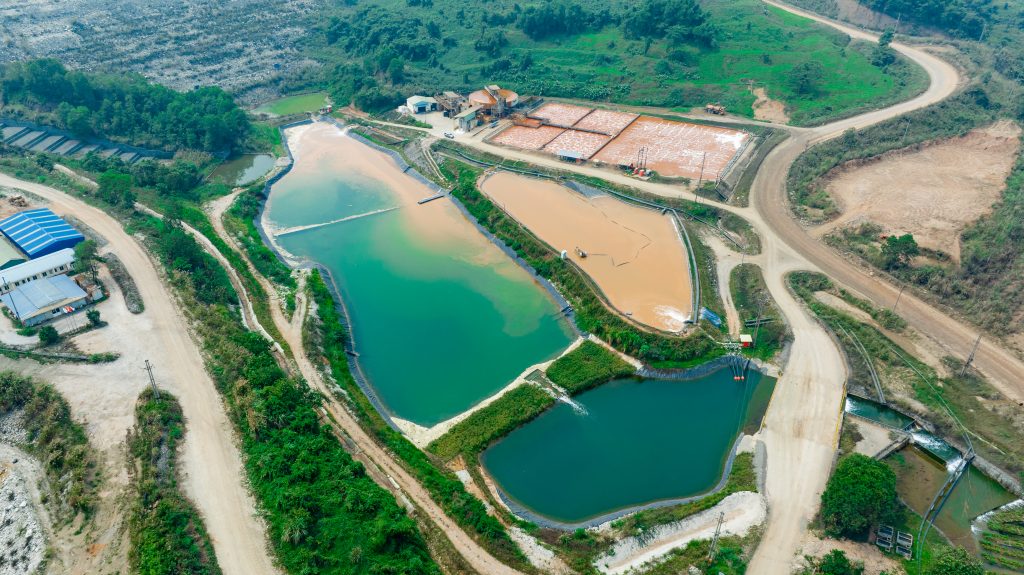
In 2Q2026, MSR announced progress on a potential 115-million-tonne resource addition across Nui Phao Expansion and Nui Chiem - supporting approximately 20-30 years of additional mining and processing life, subject to regulatory approvals.
In parallel, the GBI partnership adds committed third-party feedstock, supporting the planned expansion of tungsten oxide capacity to more than 8,000 tonnes WO₃.
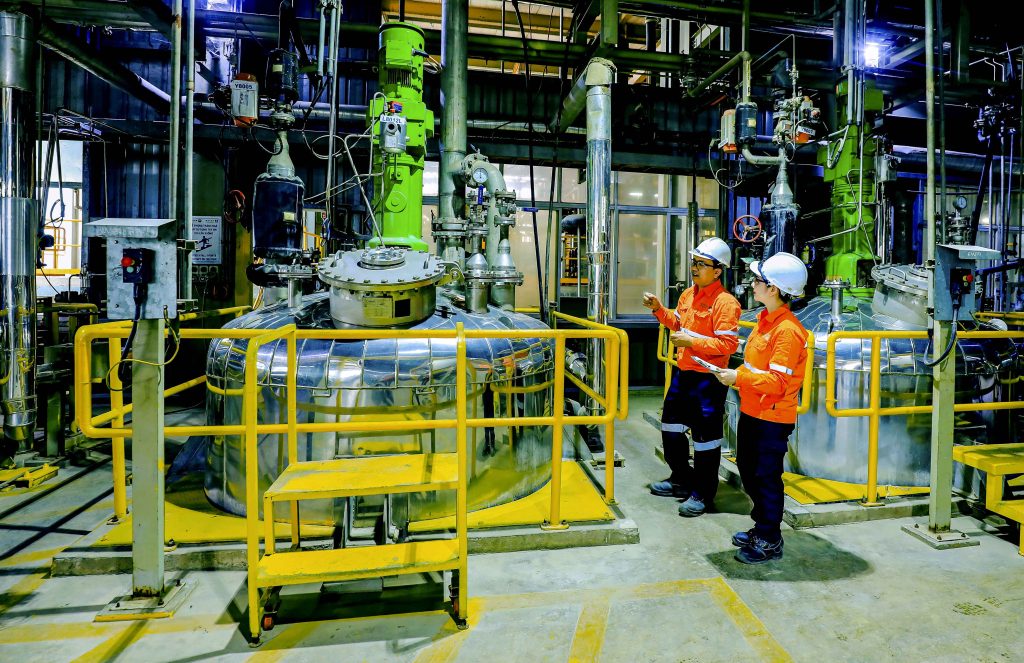
Together, these initiatives reinforce MSR’s position as one of the few scaled non-China tungsten processing platforms.
The planned HOSE migration is expected to broaden liquidity, improve market access and deepen strategic investor engagement.
Consolidated Financial Results:
Net Revenue reached VND28,118 billion for 2Q2026, up 53.5% YoY, driven by double-digit growth across the cOS and a step-change contribution from MSR on higher realized APT prices.
EBITDA reached VND7,014 billion for 2Q2026, up 87.1% YoY - on track to generate approximately VND23,000 billion, equivalent to near USD 1 billion, by end-2026.
NPAT Pre-MI earnings reached VND3,800 billion for 2Q2026, up 2.3x YoY, as operating leverage across the platform and lower net financial expenses translated EBITDA growth into faster bottom-line growth. NPAT Post-MI reached VND3,125 billion, up 3.0x YoY.
Cash and cash equivalents stood at VND17,557 billion at 2Q2026, up 0.2% versus FY2025, as stronger operating cash flow more than funded disciplined network expansion.
Consolidated debt was VND69,140 billion, up 7.6% versus FY2025.
Group Net Debt/LTM-EBITDA improved to 2.4x at 2Q2026 from 2.7x at FY2025, inside the Group's ≤3.5x commitment and on a clear path toward the longer-term 2.0x target.
MSR is the primary accelerant of Group deleveraging. Even at a conservative APT assumption of USD1,164-1,246/mtu -less than half the 2Q2026 average-MSR is on track to reduce standalone Net Debt/EBITDA to 1.7x by end-2026 and reach a net cash position in 2027. This would accelerate MSN’s deleveraging pathway and expand future dividend capacity.
LTM free cash flow reached VND9,103 billion as of 2Q2026, down 2.2% versus FY2025.
Capital allocation: with each of Masan’s businesses now self-funding its own growth, the Group's priorities for free cash flow are, in order: (1) deleveraging toward the 2.0x Net Debt/EBITDA level; (2) disciplined reinvestment in the highest-return cOS initiatives; and (3) returning capital to shareholders. Upon reaching the target Net Debt/EBITDA, the Board intends to evaluate a cash dividend and/or a share buyback program.